Surprisingly Simple Anti-Dark-Patterns that Build Trust in Ecommerce and Saas

Image courtesy of UX Collective
Last year researchers at Princeton and the University of Chicago published the results of a study on so called “dark patterns”. Dark patterns are tactics online businesses use to manipulate users to do things that will make the business more money.
For example, email capture popups that cannot be minimized or recurring billing schemes that are nearly impossible to cancel.
While the research concluded they are generally effective, overly aggressive use can cause a backlash that erodes trust and hurts your brand. Some of these tactics might soon be illegal if the Deceptive Experiences to Online Users Reduction Act becomes law.
All this got me thinking about opposite tactics that make me trust a business more. I will call them anti-dark-patterns. Here are a few:
-
Offer an Option Not To AutoRenew
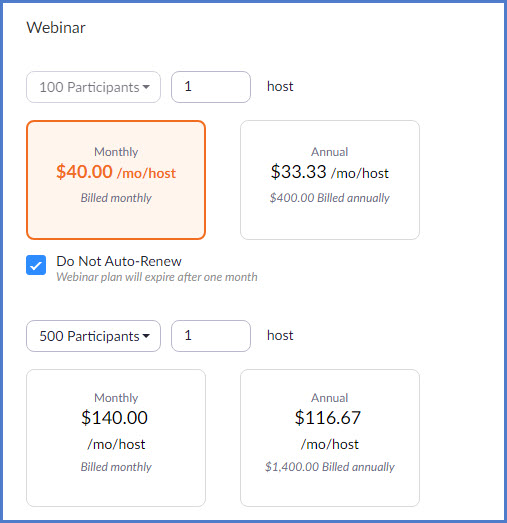
Zoom offers a webinar option for just one month
Recently, we had to hold one of regular meetups online due to the corona virus. As I already used Zoom for virtual meetings, I looked into using their webinar solution. It was a one-time event and I did not need a recurring webinar solution, so I treaded cautiously to avoid being locked into a forever billing scheme if I forgot to cancel.
Guess what? They had an option for just one month (see image above), which I checked. I immediately felt that this is a company I could trust. Most others would never offer this option, or if they did, it would be in tiny print at the bottom of the page—or worse yet, require you to go through customer support.
Later that week, someone on a large forum I belong to asked about webinar solutions. Due to my positive experience, I instantly recommended Zoom to more than 2,000 members. I suspect this kind of word of mouth referral based on trust (as well as product simplicity) has contributed a lot to Zoom’s hockey stick curve growth (they were doing well even before the corona virus).
-
Let Me Know I Will Be billed Before the Free Trial Ends
Closely related to 1) above is letting a free trial user know that they will be billed, a few days before the billing date. One company with a 7-day free trial took it even a step further: while letting me know I would be billed soon, they said something along the lines of “just in case you need extra time, we’ve thrown in two more free days. You will be billed on the 9th day”. Something about this made me want to pay for at least a month. Before, I was on the borderline.
-
Maintain the Headline Price at Checkout (Do Not Price Bait Me!)
When you buy plane tickets on Google, the headline price shown is the same price at Checkout. This
makes me trust Google and in the last few years I have not bought my tickets anywhere else!
For example, below is a headline price of $197 for a round-trip ticket from Seattle to Dallas:
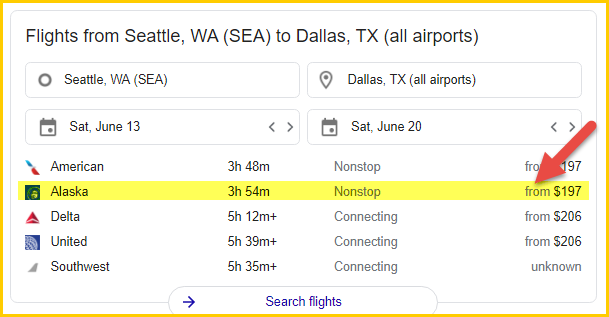
When I click through to the checkout page, it is actually 80 cents cheaper at $196.20. Most importantly, they already included all the taxes and fees in the headline price.

Contrast this approach with Pandora’s, when selling concert tickets alongside the current song playing. About a year ago, while listening to a Boyz II Men song, I noticed an ad for a tour date in Seattle. Intrigued by the low price, I clicked through. By the time I got to the checkout, the price had ballooned to almost 30% to 40% more, with all the taxes, surcharges, convenience fees and god-knows-what other fees! I have never again clicked on a concert ticket sale ad on Pandora.
-
Email Less Frequently
Many a time I have opted in for a free report or eBook only to be hounded by daily emails. I unsubscribe immediately, as I suspect many others do. Unless you are explicitly a daily newsletter kind of business, this is too much email for a new list member to handle.
To piggyback on the courtship analogy often used in marketing, it is like going from first date to showing up at her door every day asking if she is ready to do it! You will quickly turn her off, whereas if you had taken it a little slower, a meaningful relationship might have developed.
For new subscribers to our list, we email no more than twice a week.
I recall a story told by Derek Sivers (I think) about a company that sold music CDs by emailing their list once or twice a week with a recommendation. It was a nice profitable business ran by music enthusiasts who cared about recommending the most relevant CDs for different musical tastes.
Then they got acquired and the investors figured: If you make a million a year emailing twice a week, we can make at least three times as much by emailing daily. They gave the marching orders, “from now on, send a daily email”. With the original musician owners gone, the suits recommended random CDs which resulted in fewer sales despite a higher email frequency.
And in less than a year they were out of business! The listed got burned out from the aggressive promotions and most people no longer opened the emails or simply unsubscribed.
Can you think of any other anti-dark-patterns? Comment below