
Crowdfunding Record ($28 Million): The Specific Tactics Dan Shapiro Used and How He Is Transforming 3D Printing
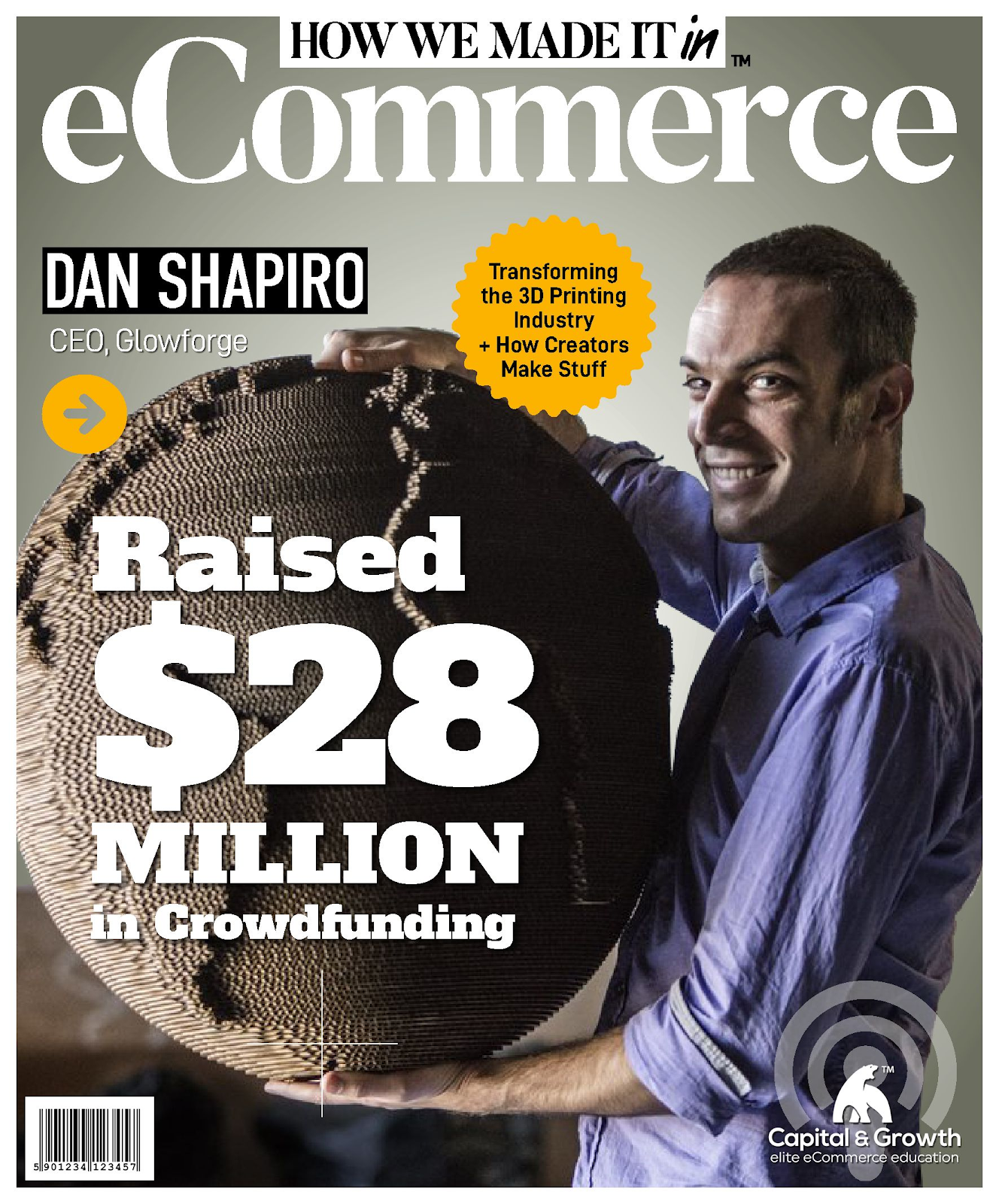
Image Credit: Seattle Times
Introduction
Dan Shapiro is the founder and CEO of Glowforge. He previously founded Robot Turtles, Sparkbuy (renamed Google Comparison), and PhotoBucket. For this episode of How We Made It In E-Commerce, Shapiro shares interesting moments in his journey as an entrepreneur.
Listen to the Podcast or Watch the Video and Discover
-
The specific tactics Dan used to set a crowdfunding record and raise $28 Million
-
Why Glowforge has one of the lowest customer acquisition costs in the industry
-
Glowforge’s secret to attracting a diverse and inclusive workforce
-
The great giveaway: 2 million of these free devices made by Glowforge are being used by first responders in handling the Covid crisis.
-
What Dan really thinks about venture capital (despite raising it for two of his companies)
-
The two surprising factors he attributes much of his success to, and his one nugget of advice to aspiring entrepreneurs.
Why was he so successful at crowdfunding?
Shapiro’s first crowdfunded project was Robot Turtles, a board game that teaches programming to preschoolers, which set the record for the most-backed board game in Kickstarter history.
“It was all about the community,” says Dan Shapiro. His friends, who loved the phrase “a board game that teaches programming to preschoolers”, encouraged Shapiro to reach out to a bigger community on Kickstarter.
“The idea of teaching preschool kids coding with a traditional board game made of cardboard was new,” he says. He knew his idea was an esoteric one, but he quickly realized how this was an opportunity and not a disadvantage.
“As somebody who is trying to make an idea take root in the world, the most powerful thing you can have is a way for people to decide whether or not they want to be a part of your cause,” he says.
If we see a great product that is for everyone, we don’t know who to share it with. But if we see a product that only one person we know would appreciate, we would contact that one person and let them know that we discovered something they might like.
“It’s all about communication, passion, excitement, and finding people to get excited about what you do,” Shapiro says.

Shapiro with a Robot Turtles kit. Image Credit: GeekDad.com
How much effort did Dan Shapiro put into his crowdfunding?
For Robot Turtles, except hiring a freelancer for a $2,000 video shoot, Shapiro did everything on his own. He did everything that he could. He emailed everyone in his email history. He shared it on social media non-stop. He called and emailed every reporter that he knew. He called in every favor possible. But he says what made the difference was that those people held onto that one line he used to describe his idea: “a board game that teaches programming to preschoolers.”
When NPR picked up the Robot Turtles story, Shapiro was two-thirds of the way through into the crowdfunding campaign. People who heard about it through NPR had a lot of content to absorb and share when they got on the campaign page.
Glowforge: The biggest 30-day crowdfunding campaign in history
The idea for Glowforge started with a Robot Turtles fan. A dad whose son loved Robot Turtles asked Shapiro if he would consider making a deluxe edition of the game. And what if there were plastic figures in this deluxe edition?
When Shapiro looked into 3D printing for Robot Turtles Deluxe’s plastic figures, he realized that the 3D printing technology at the time had results that were ugly, and that the printing process was too slow.
As he kept searching for the best way to make his new Robot Turtles, someone mentioned laser cutters. Shapiro liked the idea immediately, remembering his high school college years when he worked with lasers. He imported an industrial laser cutting machine from China and installed it in his garage.
He made the custom edition Robot Turtles Deluxe himself and it all worked out so well that he started to wonder: what if everybody could have this technology in their homes to make whatever they wanted?
He shared this vision with Mark Gosselin, and they founded Glowforge together.
“Our birthright as humans is tools; it’s making things.”
For all human history, Shapiro explains, when people needed something, they would make it themselves or someone in their community would make it for them. He believes that technology can give us back the ability to create for ourselves, which has been taken away from us in the last couple of hundred years.
Glowforge customers have been using it to make ladders to feed birds, pediatric heart surgery training kits, and most recently “Ear Savers” to help essential workers during the Covid19 crisis by making sure their masks fit and don’t injure their ears.


Glowforge printed ear savers. Image credit:
The Number That Defines Glowforge: 60%
Last month, 60% of Glowforge customers were last-click-attributed to another customer.
According to Shapiro, happy customers are their biggest support in marketing. But of course, they do advertise on social media as well. Shapiro and his marketing team try to conquer platforms one at a time. They started by focusing on Facebook, then moved onto YouTube, and now they advertise on TV.
Glowforge invests in itself and its community rather than physical stores to sell their products. A generous referral program makes sure to keep the customers happy.
A Company That Looked Like Its Future Customers from the Beginning
Dan Shapiro was progressive in diversity before it was fashionable.
Glowforge started offering bounties for diversity hire referrals years ago. Today, the bounty is $10,000. They allocated a budget for diversity and inclusion to set up a company that could look like their future customers, diverse and inclusive.
Shapiro and his white male partner Mark decided that if they would build their products for only people who look like them, they would be missing out on so many of the best aspects of creativity. They wanted to create a diverse and inclusive company.
Today, they run bias, micro-aggression, and anti-racism training for all employees and try their best to find the best health insurance that is thoughtful about transgender employees as well as parents. They make all job offers based on third party salary data, rather than negotiation, because data shows that the negotiation process is biased against women and people of color.
Still, Shapiro admits they could be doing better in terms of diversity. Recently, they added internship programs for minority students and started posting job ads on minority-focused job boards.
How does a company create a niche product but appeal to a mass market?
Shapiro founded two venture-backed and angel-backed companies before Robot Turtles. His latest company Glowforge was also VC backed, but just like Shayan Zadeh of Zoosk in the previous episode of How We Made It In E-Commerce, Shapiro doesn’t recommend chasing VC to everyone. In fact, he has strong opinions about why you should probably stay away from VC’s altogether.
“Venture Capital is Wrong for Almost Every Company.”
Shapiro says that VC is a racist, sexist, and still very much Bay Area focused world. If you’re still determined to get VC, Shapiro warns, you should know that the road to getting it is a brutal path.
“It’s only right for people who are running businesses that need a lot of money for mass production,” he says.
Glowforge did have VC, but Shapiro would have never accepted VC investment for Robot Turtles. He thinks investors would have overwhelmed the business with demands for scale and growth, which weren’t right for a board game company.
But if you’re set on VC, how do you bridge the gap between something that’s bite-sized and buildable, and the grand vision that investors want?
“Come up with a small idea and start from there,” Shapiro says. “Airbnb’s foundational idea of renting air mattresses was so polarizing that almost nobody wanted to do it. Follow the path by which that small audience grows to include everybody; the path from ‘I want to rent an airbed in somebody else’s apartment’ to ‘We can destroy the hotel industry by making use of unused residential real estate.”
“Stay Focused on One Thing”
Glowforge stayed away from retail for a long time because retailers would often ask Glowforge to change something about the product to put it in their stores. Shapiro believed it was important to stay focused on one thing.
Be Your Own Biggest Champion
When we asked what Shapiro owed his success to, he started off by saying: “In order: privilege, luck, and then everything else is below that. The odds of being successfully funded go up by a horrific amount if you are white and a guy. The numbers are just way more difficult outside of that because it is still a very racist, sexist, prejudiced and biased industry, and that stinks.”
Shapiro’s company SparkBuy got acquired by Google thanks to his once having sat next to a guy on a plane who worked for Google. Another lucky moment in his career is, he believes, when the 69th person he asked to finance his first company said yes. What if he had been sick on that day? 68 people had already said no before that.
A few years after he got out of college, Shapiro had a startup idea with a friend. They almost got investors to support them, but the deal fell through at the last minute. Shapiro spent the next nine months depressed, at home, playing video games, until his then girlfriend and now wife convinced him to get out there and start again.
His one word of advice to e-commerce entrepreneurs: “Be Your Own Biggest Champion!”