Do You Use These 3 Customer Support Tactics to Boost Your Ecommerce Sales?

Businesses in the United States lose around $62 billion in sales because of bad service. Can you afford to be a part of that statistic? Not many businesses can. Improving customer service is an essential part of combating that churn, but how does that work for an e-commerce store?
In this post, we’ll look at a novel approach to the problem. We’ll consider how to boost sales and service levels by using inbound techniques through customer support.
As a regular reader, you’ll be familiar with the concept of inbound marketing. If you need a refresher, our post, “What is Content Marketing?” is an excellent place to start.
The highlights are that content marketing provides you with a gentle sales technique. It provides clients with valuable resources and information. Many times, this information leads them to conclude that your product or store is the best option.
It’s an effective technique that 91% of global companies use.
Image by Gerd Altmann from Pixabay

Why Is Content Marketing So Effective?
Content marketing has no sales message. The aim is to improve the reader’s day in some way. You’re giving them something they want to read and share, rather than ads that annoy them. It gives your company:
-
A chance to demonstrate its expertise
-
A way to introduce concepts that underpin why your products are so effective
-
An excellent way to improve the customer relationship
-
Better brand awareness
Well-considered content reassures clients that they’re dealing with the right company for their needs.
How Do You Know That Your Content Marketing Is Effective?
There are several ways to work out how effective your content marketing is. The graph below details how publishers and brands assess success.
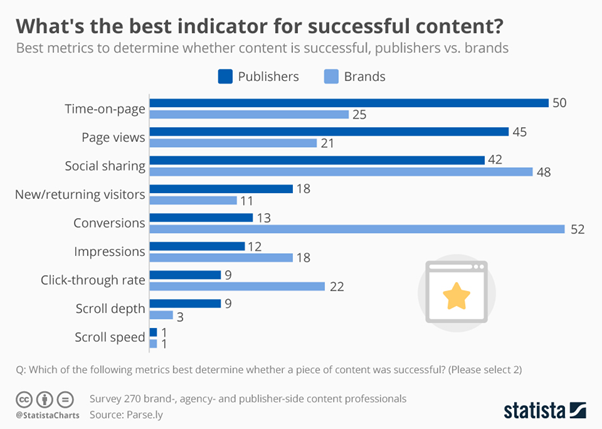
Source: Statista
Most companies today pay careful attention to the success of their content marketing in attracting clients. Many make the mistake of stopping their inbound tactics when the client is on the hook.
By doing so, they’re wasting a great opportunity. Companies should follow up inbound marketing efforts with inbound customer service.
What Is Inbound Customer Service?
Inbound customer service refers to instances when your client contacts the firm. They may do so to enquire about products, request assistance, or lodge a complaint.
Companies that ace inbound service incorporate the same elements that they use in inbound marketing. They delight and engage their clients. They show them that the firm is a valuable resource. These firms ensure that the client can use their product successfully, recommending helpful tricks and upgrades when appropriate.
The Importance of Making an Effort
72% of satisfied clients will tell at least six people about their experience. That’s free advertising that’s hard to beat.
Following up or providing additional support has financial benefits. You may, for example, recover 20.3% of abandoned cart sales by emailing the client within 24 hours. You could, for example, remind the shopper that they left the item behind and offer support or answer to any question they have.
More importantly, perhaps two-thirds of consumer loyalty is driven by the user experience across multiple channels. It’s not enough to wow the client in the beginning and hope they remember. You must continuously show a commitment to improving the customer experience.
Incorporating This New Methodology
There are three simple parts to this process.
Encourage
Encourage your existing clients to provide feedback, even if it means instituting some sort of rewards program. Make it easy for clients to contact the company across multiple channels and use positive feedback to identify greater focus areas.
Say, for example, that clients love a particular feature of your app. Build up the knowledge base around that app and flesh it out with extra video and blog content. You’ll follow suit with other areas of the product but start with those that are most popular so that you gain more new users naturally.
A Robust Customer Support Network
Build self-service resources that are easy to use. Supplement these with a great support center. Engage the use of chatbots across multiple channels to answer simple queries fast and effectively.
Then provide human support for those who need it. This should be by phone, live chat, and, if possible, through social media. As an e-commerce provider, most of your clients will be self-sufficient. Still, that doesn’t mean that they’ll never need assistance.
Wow Them
Whenever a client reaches out, respond quickly and thoughtfully. It’s here where inbound marketing techniques come in most helpful. Say, for example, a client reviews your app and raves about one of the features.
You should reach out and thank them for their review. You might also point them to a walk-through of other useful features within the app that they might use. Work with them to help them get the best out of the product, and it’ll become indispensable.
Provide them with additional resources that they’ll find useful. These may or may not directly relate to your product. For example, you could point them to a web page of additional pointers to get the most out of the app. You might also tell them about a club or forum that centers on things they’re interested in.
Say, for example, your app maps the night sky, and they write that they love being able to navigate as ancient sailors did. You could point them to a website that shows images of deep space, sites that teach them to navigate according to the sun, and so forth.
Moving From Pure Support to Customer Success
Most companies are reactive. When a client calls in with a problem, they’ll solve it. Good customer support is about assisting the client when they need help. It’s about answering questions the client might pose.
Customer success goes a step further. It may be described as proactive support. More companies today are teaching their support agents techniques to improve customer success.
What Is Customer Success and Why Is It Essential?
Customer success refers to how much use your client gets from your product. Are they able to get the maximum benefit from it, or do they find it hard to use?
Customer success is critical because it’s a predictor of a client’s future behavior. If your client finds the product difficult to use, they’re likely to look for a different solution. Someone who understands the product and uses many features will find it invaluable and tell their friends about it.
Customer success entails ensuring that the client has the correct product for their needs and understanding of how to use it. It starts with a smart, intuitive design. Companies should make their products simple to use or teach clients how to use them.
Next, companies should make it easy for clients to see whether the product will work for them. This could be through live support, an extensive knowledge base, or by providing a questionnaire type of system to help clients narrow down their options.
When you’re running an e-commerce store with several products, providing support at this level may entail much extra work. You may be hesitant to add things like questionnaires for fear of driving your customers away.
It’s not quite as risky as it seems. By helping clients narrow their options upfront, you could prevent them from making expensive, unnecessary purchases. Your brand image will improve in your consumers’ eyes because you didn’t try to make a sale at any cost.
Those that buy will receive the items that best suit their needs. Your overall customer satisfaction levels will increase, and you’re more likely to convert clients into brand ambassadors. They’ll refer new clients, and you’ll get even more sales.
Final Thoughts
Consumers respond positively to inbound marketing techniques because they position the brand as a valuable resource. Don’t lose that momentum once your client’s on-board. Continue to reinforce your brand’s image as a valuable resource, and you’ll boost your sales exponentially.
Oleg Deneka is the Founder at Techpricecrunch.com. Like the Knights of the Round Table in their search for the Holy Grail, he once found himself in the dense forest of today’s internet. He decided to start his website with a strong desire to help wanderers, lost among endless sites and blogs, by providing top-notch statistics and verified numbers. While he’s not working with the talented and equally enthusiastic team at TechPriceCrunch, he enjoys jogging, mountain climbing, and language learning.