Buying a Shopify Store: How to Avoid Getting Scammed

Courtesy: Unsplash
Buying a Shopify store and starting a business is thrilling, exciting, and complicated. So in this article, we’d compare three major platforms for buying online stores—Shopify’s Exchange, Flippa, and FE International—and show you everything you need to know about buying a Shopify store.
Thanks to the pandemic and how fast it’s making e-commerce grow, it’s no longer news that any entrepreneur who wants to start a successful business must be quick to give their business a solid presence online. And what better way to do this than by buying an online store.
Buying an online store eliminates the hassle of setting up your store and growing your business from scratch.
We’ve seen new entrepreneurs struggle in frustration as they spend valuable weeks, sometimes even months, tinkering with their homepage design, shipping settings, and product listings, not knowing the right steps to optimize their stores before launching fully.
But even though buying an established store would give you a head start, there’s more to buying a Shopify store than meets the eye. So join us as we walk you through the processes involved.
Courtesy: Pexels
Content
-
Why every business needs an online store
-
Deliver 24/7 shipping
-
Serve customers worldwide
-
Access to funnel clarity
-
Six reasons why it’s far better to buy than to build a Shopify store
-
Overcome procrastination
-
Save precious time
-
Get a successful business
-
Generate instant sales from day 1
-
Get a professional store irrespective of your skills
-
Tackle product sourcing
-
Here’s what to look out for when buying a Shopify store
-
The best places to buy a Shopify store
-
An overview of Shopify’s exchange
-
An overview of Flippa
-
An overview of FE International
-
Exchange vs. Flippa vs. FE International: A thorough comparison
-
The big question: Which option is best for you?
-
How to spot scams when buying a Shopify Store
-
Stores sold at a cheap rate
-
Stores with fake revenue and financial screenshots
-
Stores with questionable traffic
-
Stores whose seller doesn’t provide enough information
-
Stores with sudden revenue spikes
-
Template stores
-
Don't let your guard down
Why Every Business Needs an Online Store

Courtesy: Pexels
In 2020, customers spent over $860 billion with online retailers in the U.S., making 2020s eCommerce boost the biggest yearly eCommerce growth rate in the United States in at least two decades.
And with customers now meeting most of their retail needs online, your business needs an online store that’d help it:
-
Deliver 24/7 Shipping
Getting an online store would give your business a competitive edge by allowing your customers to access your business and make purchases at any time of the day.
-
Serve Customers Worldwide
Your online store is a window that’d help your business engage with customers even though they’re scattered across the world, and this would boost the number of customers buying from your business.
-
Access to funnel clarity
Unlike a physical store, it’s very easy to track how often a single customer visits your online store before purchasing. And this information can help you design a marketing strategy for encouraging customers still on the fence about purchasing.
6 Reasons Why it’s Far Better to buy than to Build a Shopify Store
Courtesy: Icenineonline.com
Although buying a Shopify store is a lot more expensive than building one yourself, getting an established store will definitely help you:
-
Overcome Procrastination
When it comes to starting a business, procrastination is a big deal. There are lots of critical decisions that go into building a solid Shopify store. These decisions not only slow down countless new entrepreneurs but also discourages them from taking action.
And that’s why buying a Shopify store is great because it removes the burden of making critical decisions about logos, themes, and customer support before setting up a successful shop.
-
Save Precious Time
Everyone who’s ever built an online store knows that it takes a lot of time and work, from designing the look of your store, taking and editing the pictures of your products, to writing your product’s description. There’s a lot of work to be done.
But unlike building a store, buying an online store not only gets you to take action and save you from procrastination, but it also saves you a lot of valuable time that could be spent on other areas of your business like marketing.
-
Get a Successful Business
One primary fear of new entrepreneurs creating their stores on Shopify is that their store may not get the amount of traffic it needs to survive and be profitable. And that’s because it takes about twelve months to build a profitable Shopify store.
But when you buy a successful Shopify store, you’re not only getting a successful business; you’re getting a reliable brand that thousands of repeat customers have come to love and trust. And this saves you a lot of time that you’d have spent in search of a winning product.
-
Generate Instant Sales from Day 1
Skipping the shop setup process entirely, and going directly into marketing, isn’t the best part about buying a Shopify store.
The best part about buying a proven online store—if products have been uploaded to the store—is that you can begin selling the very same day you receive access to the account.
Now, if you were to build a Shopify store on your own, the chances of making your first sale the very day you set up shop are very slim. But by buying a proven Shopify store, your business gets to enjoy accelerated sales that’d help it outperform and stay ahead of other new stores still in the startup phase.
-
Get a Professional Store Irrespective of Your Skills

Courtesy: Webinopoly.com
Nothing turns off potential customers like a poorly designed and unresponsive store. And instead of building a Shopify store from scratch and trying to figure out what works, buying a Shopify store built by other successful entrepreneurs would give you instant access to a responsive site with quick load time, a customized 404 error page, and lots of other perks.
-
Tackle Product Sourcing
Although finding the right goods for your Shopify store is difficult, it’s vital to the survival of your business because, without the right product, your online store wouldn’t be able to attract a steady flow of customers.
Many entrepreneurs have been caught in the tangled web of sourcing for their products on Aliexpress, and the best way to avoid the hassles that come with product sourcing is to get an established store that has already solved the problem of product sourcing.
Here’s what to look out for when buying a Shopify Store

Courtesy: Unsplash
Now that you have a clear idea of what you stand to gain from buying an established Shopify store, don’t be in a hurry and start buying stores for your business because you need to know what to look out for before buying a store online.
Picking the right online store is critical to the success of your business. It will impact the shopping experience you provide for your customers, the efficiency of your back-end admin operations, your marketing effectiveness, and other factors.
So, before deciding to buy any Shopify store, make sure you consider the following questions:
-
Is the store unique?
-
What is the store's traffic like?
-
What does the store’s long-term traffic pattern look like?
-
How much would you invest in marketing and advertising?
-
Why does the seller want to sell?
-
How much money does it make weekly, monthly, and yearly?
-
Is there an income range?
-
What is the current return on investment?
-
How much time will it take you to recoup your investment?
-
Would it be possible to add an additional revenue stream?
-
How much time does the owner devote to the store's upkeep?
-
What would it cost you to run the store?
-
How frequently would the store be updated?
-
How long has the store been in business?
-
Would it be possible to add new content or draw more traffic to the store?
Answering these questions would help you identify which stores would be best for you.
The Best Places to Buy a Shopify Store
Although the number of sites where entrepreneurs can purchase Shopify stores is growing rapidly—thanks to increased demand—we're only going to look at three of them: Shopify's Exchange, Flippa, and FE International.
An Overview of Shopify’s Exchange

Courtesy: Shopify.com
Shopify launched its Shopify Exchange marketplace in 2017, and the goal was to help people looking to start a thriving business find the best one for them. With over 10,000 stores spread across several niches, it’s one of the biggest platforms for entrepreneurs to buy or sell their Shopify stores.
Shopify’s Exchange is great because it provides reliable insights directly from Shopify about the store’s performance. And this allows buyers to see the amount of traffic the store is currently attracting, the number of sales the store has made, and revenue generated so far.
Shopify guarantees high-quality stores by going the extra mile to vet sellers who’re hoping to list their stores on Exchange Marketplace and removing those with negative history and bad customer relations.
Shopify’s Exchange Marketplace allows you to find a Shopify store that aligns with your industry, business type, size, and location, not to mention that Shopify’s team provides support throughout the buying process.
An Overview of Flippa
Courtesy: Flippa.com
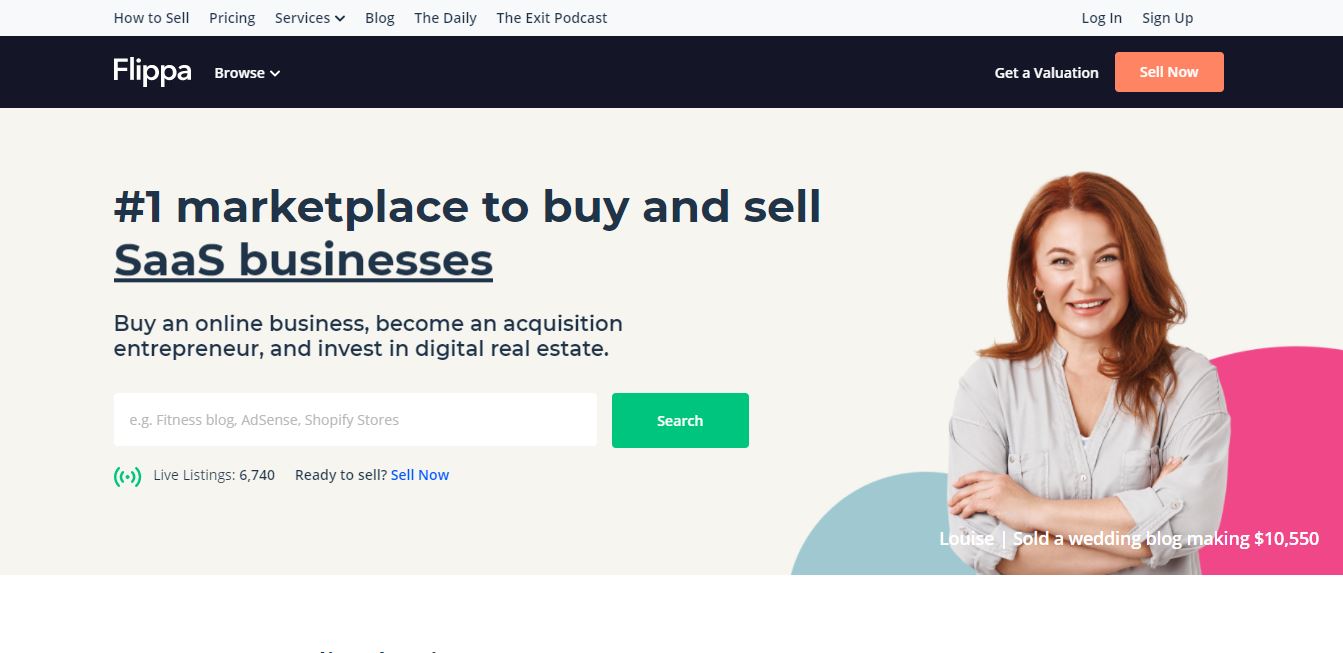
Flippa is a great platform that allows entrepreneurs to buy or sell any online property at affordable rates. The platform boasts hundreds of thousands of potential buyers and currently offers over 3,000 eCommerce stores for sale, making it one of the biggest marketplaces online.
And to help buyers make the best choice, Flippa allows all buyers to order a comprehensive due diligence report of any store they’re interested in, so they can make informed decisions about the business.
These due diligence reports offer buyers deep insights into the store’s inner workings. It lets them see the store’s financial analysis, pricing analysis, traffic analysis, seller analysis, sales, marketing analysis, competition analysis, and legal history.
Flippa also offers access to financial services, third-party brokers, and concierge services—‘Flippa Finder’—to first-time buyers.
But Flippa doesn’t only focus on buyers; it also allows sellers to connect their google analytics with their listings and lets sellers offer their stores as a classified listing or an auction listing. Sellers can even get a broker to handle the entire selling process of their store.
An Overview of FE International
Courtesy: Feinternational.com
FE International is a merger and acquisition consulting firm that has grown remarkably since its creation in 2010. FE International’s brokers represent over 15,000 buyers and help connect them to the best online businesses for them.
Now, FE International is a great option for buyers seeking high-performing and profitable online stores. FE International offers premium online businesses ranging from $50,000 to over $5,000,000. The platform has sold more premium stores than any other platform in the industry.
FE International has made tremendous success, selling over 800 stores valued at half a billion dollars with a remarkable 94.1% success rate.
And like other platforms, FE International also offers due diligence reports that capture the store's ownership, traffic, financial, operational, technical, and legal aspects of the business. And the process is overseen directly by FE International.
Exchange vs. Flippa vs. FE International: A Thorough Comparison

Courtesy: Unsplash
We will be comparing these platforms on eight major criteria to understand them better and decide which one would be best for anyone looking to buy a Shopify store.
So let’s jump right in and take a deeper look at:
-
Target Buyers
Making price comparisons is quite tricky because every platform has unique features that influence the pricing of the stores they offer.
-
Shopify’s Exchange: Shopify caters to every buyer, whether they’re looking for low or high-budget Shopify stores.
-
Flippa: Although Flippa offers a wide variety of online stores, the platform seems to cater to buyers on a low budget.
-
FE International: FE International focuses on premium stores. It’s not a great place for buyers on a low budget.
-
Ease of Use
This is one area where Exchange, Flippa, and FE International all perform excellently well. Their websites load quickly, and they’re also very easy to navigate. Even first-time visitors/buyers can start their purchase process with no supervision.
-
Payment Methods
To ensure a safe and trusted payment system, Shopify’s Exchange, Flippa, and FE International all use Escrow, a popular third-party payment protection system.
-
Service Fees
Service fees have been a hot topic for many sellers looking to sell their Shopify Stores. Here’s how these platforms tackle it.
-
Shopify’s Exchange: Shopify’s service fees are quite vague since sellers only pay after a sale has been completed, and Shopify estimates the fees.
-
Flippa: Unlike Shopify, Flippa is very transparent with its service fees. The platform receives a commission of 10% for every sale below $50,000, 7.5% for sales between $50,001 and $100,000, 5% for sales over $100,000, and 15% for broker managed listings.
-
FE International: Buyers are charged a transaction fee of 2.5% up to a maximum of $1000. A 1% fee for Escrow service is also split between the buyer and the seller. Also, FE International receives a 15% commission once the site is sold.
-
Listing Fees (for sellers)
Here’s a look at what these platforms charge sellers for listing their stores on their platforms.
-
Shopify’s Exchange: There’s no cost for listing your store on Shopify’s Exchange marketplace.
-
Flippa: Although Flippa charges a listing fee of $49, sellers using Flippa’s broker services pay $200 for their listing. Also, sellers can make their listing confidential for $99, upgrade their listings with a premium boost costing between $65-$295, or get a listing optimization report for $29.
-
FE International: FE International doesn’t charge a listing fee.
-
Due Diligence Report
Due diligence reports help buyers get the necessary information that’d help them decide if buying a store is a great option or not. And although every buyer should do their due diligence before buying a Shopify store, these platforms also help in this area.
-
Shopify’s Exchange: The Exchange platform draws its due diligence report directly from Shopify itself.
-
Flippa: Buyers can request an 11-14 page Red Flag report for $1000, a 21-25 page Standard Report for $1500, or a 26-35 page Enhanced report for $2000.
-
FE International: FE International provides an extensive 25-35 page report to every buyer.
-
Support Options
One of the best things any business can do is provide fast and dedicated support to help their customers get the best service they need. So how do these platforms handle that? Well, let’s check it out:
-
Shopify’s Exchange: Exchange offers buyers and sellers a dedicated support team to help them navigate the purchase process.
-
Flippa: Flippa offers concierge services to first-time buyers at a flat fee of $50 and an acquisition fee of 2.5% if any purchase is made.
-
FE International: FE International provides every seller and buyer with direct support from their team.
-
Store Vetting
The last thing any buyer wants is to visit any of these platforms, buy a store, only to discover that they’ve been scammed. Scams are a big issue for buyers seeking stores online, so let’s see how these platforms handle it.
-
Shopify’s Exchange: Shopify’s Exchange maintains its integrity by only offering Shopify stores with good standing.
-
Flippa: Flippa has a very weak system of vetting the online stores listed on their platform; hence there’s a high rate of scams.
-
FE International: FE International takes great care in vetting every business listed on their platform.
In Summary
Here’s a table showing a quick rundown of the comparison we performed above:
The Big Question: Which Option is Best for You?

Courtesy: Pexels
From the in-depth examination we performed above, it’s pretty obvious that FE International and Shopify’s Exchange are both excellent options for anyone seeking to buy an online business.
FE International performs exceptionally well in providing solid support to buyers, vetting the store listed on their platforms, and releasing a thorough due diligence report. The only issue being that FE International only caters to buyers with a high budget.
But unlike how FE International targets buyers with deep pockets, Shopify’s Exchange provides a relatively flexible approach. The platform is designed to suit buyers irrespective of their budget while also providing great services like store vetting and due diligence reports directly sourced from Shopify.
Flippa, on the other hand, performed poorly when compared to FE International and Shopify’s Exchange. Among other things, Flippa doesn’t vet the stores listed on its platform, resulting in countless scams and a high level of distrust between buyers and sellers.
So if you’re looking to buy a Shopify store, your best option is to search for a store that appeals to you on FE International or Shopify’s Exchange marketplace.
How to Spot Scams when Buying a Shopify Store
When trying to buy a Shopify store online, you must keep your eyes open and avoid:
-
Stores Sold at a Cheap Rate
Courtesy: nichepursuit.com
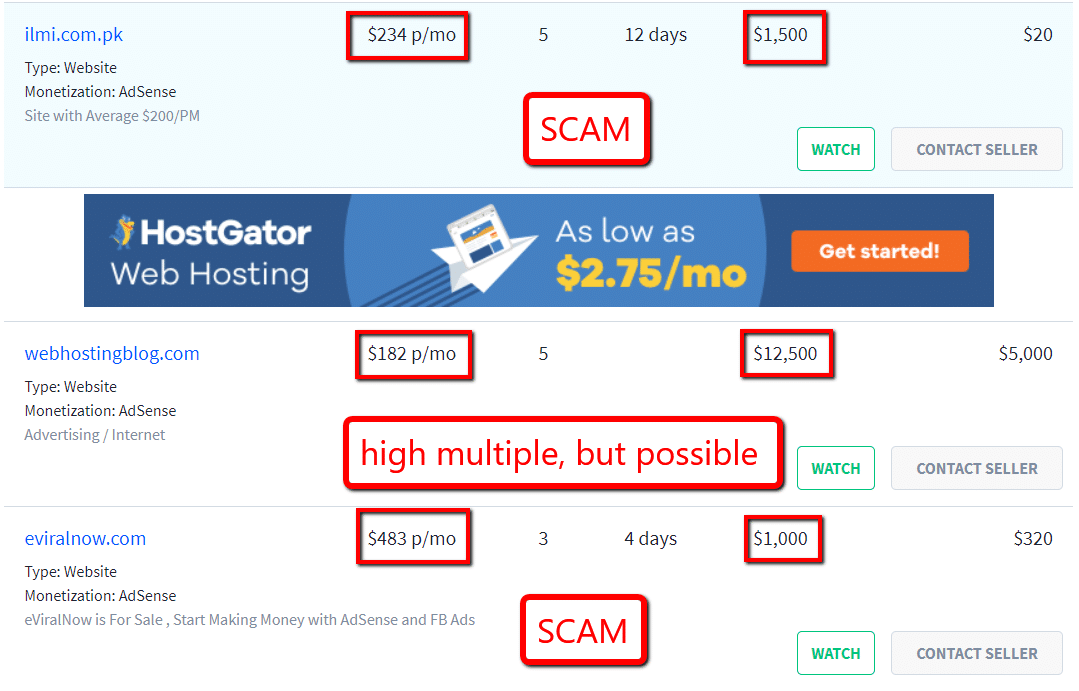
Understanding that the average online store sells for 20x or 36x their average monthly profit on a typical brokerage can help you identify and avoid scams because most scams sell at 2x their average monthly profit. Remember, if a listing is too good to be true, then it probably isn’t.
-
Stores with Fake Revenue and Financial Screenshots

Courtesy: thewebsiteflip.com
This is one of the most common scams buyers face when purchasing on Flippa because the platform doesn’t vet the information sellers attach to their listings.
Bear in mind that it’s pretty easy for sellers to load their earnings page, edit the page’s HTML, take screenshots, and attach it to their listings.
But sometimes, even after editing the page’s HTML, some sellers forget to update other corresponding numbers to match the changes they made. Take a deep look at the screenshot above and see if the numbers match up.
So, before buying any store, check that all of the numbers on the screenshots match. Also, request a conference call and ask the seller to screenshare and give you a live tour of the store. While screensharing, ask the seller to show you the store’s affiliate dashboard. Also, ask them to refresh the site so you can be sure that what you're looking at wasn’t faked.
-
Stores with Questionable Traffic
Courtesy: nichepursuits.com
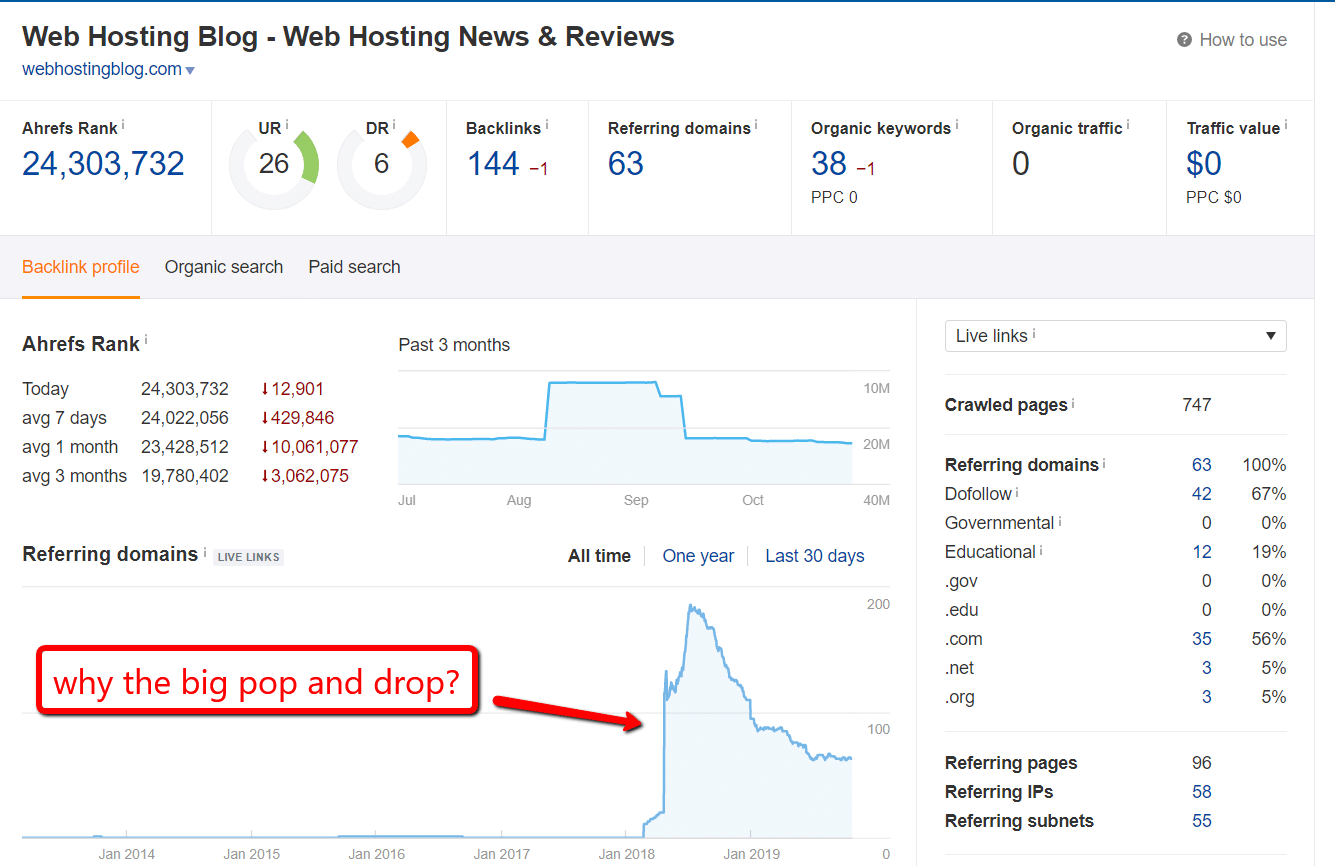
Before buying an online store, make sure you check the store’s traffic performance on Google Analytics or Ahrefs. This will help you verify if the information the seller attached to their listing is correct.
Watch out for stores that suddenly get a ton of backlinks, only to lose most of them later on because it’s likely the sellers purchased traffic.
Don’t buy a store that gets minimal organic traffic, a ton of traffic from inactive social media profiles, or an extremely high bounce rate. Also, as a general rule of thumb, avoid stores whose customers spend less than 10 seconds on their site.
So make sure you verify the data provided by Google Analytics with other tools like AHREFs and SEMRush. And one more thing, tread carefully in a situation where the seller doesn’t attach any analytics.
-
Stores whose Sellers don’t Provide Enough Details
Suppose you’re trying to get in touch with a seller, and they don’t respond or react badly whenever they do. In that case, the best thing you can do is not to buy the store because if the seller isn’t responsive now, don’t expect them to give you the necessary after-sale assistance to guarantee a seamless transfer of the store.
-
Stores with Sudden Revenue Spikes
Although a sudden and unexpected increase in income isn’t a sign of fraud, however, if the business isn’t a niche site that sees its revenue spike at certain months of the year, then you need to tread carefully.
Now, even though some Shopify stores are busier and their sales spike at specific periods of the year, they still record sales, albeit lower, at other less busy months of the year. It becomes an issue of concern when the store you’re looking to buy has zero revenue most months, and then suddenly there is a big surge.
-
Template Stores
One critical reason you should only buy established stores is that most starter or template stores are just scams waiting to happen. These sellers are simply trying to resell WordPress themes to you.
Remember: when buying a Shopify store online, only use a platform you understand and trust. The last thing you need is to spend thousands buying a ‘promising store’ only to find out that you’ve lost a massive chunk of your capital to a scammer.
Don't Let Your Guard Down
Now that you have a clear idea of why your business needs a Shopify store, why it’s better to buy one, what to look out for when buying your store, the best places to get it, and how to avoid getting scammed, it’s time to go out there and find the best store for your business.
Let us know in the comment below which of these platforms you intend to use—or used—to buy your Shopify store.